What can you do to make things a little safer for LGBTI youth?
Oct 2
/
Rene Luisman
Young people in the Netherlands have developed much more negative views on homosexuality. Figures published this week by Utrecht University and the Trimbos Institute show that acceptance has declined sharply. The percentage of young people who believe their gay or lesbian classmates can speak openly about their sexual orientation at school has dropped to 45 percent.
For years, I provided educational sessions at schools on behalf of the Dutch association for LGBTI rights. I wanted to be the role model I had once lacked myself. And I hoped that, in doing so, I would gain a better understanding of how young people from diverse backgrounds think about gender and sexual diversity.
What I learned is that it is perfectly possible to engage in a respectful conversation with one another, even when coming from different cultural backgrounds. It turned out that—precisely by asking questions and sharing experiences—we often had far more in common than we realized. This, in turn, fostered greater understanding and connection. For instance, students shared stories about situations where they had felt different or misunderstood. And sometimes, an LGBTQ+ student felt safe enough to speak openly about their feelings and received support from the class.
Yet, after a few years, I stepped down from this role. At a certain point, the negative comments were getting to me too much. It often felt as though I had to defend my right to exist—something that took me back to my own childhood.
What I learned is that it is perfectly possible to engage in a respectful conversation with one another, even when coming from different cultural backgrounds. It turned out that—precisely by asking questions and sharing experiences—we often had far more in common than we realized. This, in turn, fostered greater understanding and connection. For instance, students shared stories about situations where they had felt different or misunderstood. And sometimes, an LGBTQ+ student felt safe enough to speak openly about their feelings and received support from the class.
Yet, after a few years, I stepped down from this role. At a certain point, the negative comments were getting to me too much. It often felt as though I had to defend my right to exist—something that took me back to my own childhood.
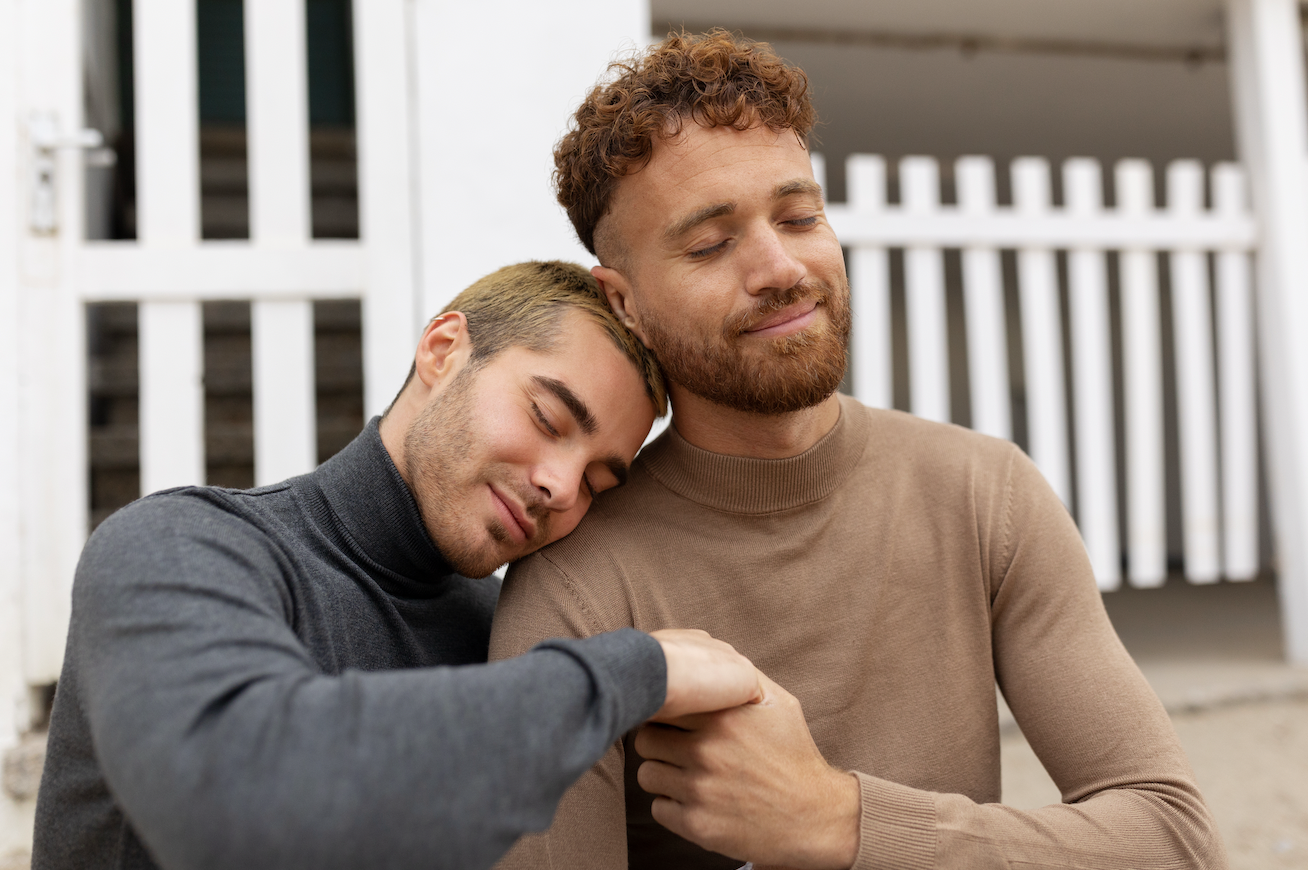
I discovered that I was attracted to men in the early 1990s. Growing up in a strict Christian environment, I felt no room to explore or develop my own sexual identity. Neither at school nor at home did it ever feel safe enough to reveal this part of myself. Afraid of rejection, I conformed, suppressed my feelings, and did what was expected of me. Yet, deep down, I felt lonely and misunderstood. The fear ran so deep that it took another twenty years before I could accept myself as I was.
This week, I stumbled upon the Dutch podcast ‘Luister Anita’ by chance. What a gem! Across five episodes, host Winfried Baijens takes you back to 1977—the year American singer Anita Bryant spread a wave of anti-gay hatred. To offer a counter-voice, Dutch celebrities organized a benefit concert to raise funds for an advertisement in Time Magazine. In the podcast, you hear the witty remarks of Mies Bouwman and the activist songs of Jelle and Ted en de Flikkers. But what moved me most was the united front the Netherlands presented in taking a stand.
How supported the young René would have felt had this message reached him. If only I had known during those lonely years that so many people were speaking out to say it is okay to be different—not with a message of hate and rejection, but of love. Unlike in my youth, it is much easier for young people today to find information online. At the same time, however, hate is on the rise. Rainbow benches and flags are being vandalized, social media is rife with hateful comments, and LGBTQ+ rights are under pressure worldwide.
Especially now, it is important to show your support. Look around you: what can you do to make things a little safer for other LGBTQ+ youth? It might mean calmly addressing someone who makes an unpleasant or judgmental remark, reaching out to someone who is being excluded, telling children stories in which there is room to be different or being the example you once missed.
This week, I stumbled upon the Dutch podcast ‘Luister Anita’ by chance. What a gem! Across five episodes, host Winfried Baijens takes you back to 1977—the year American singer Anita Bryant spread a wave of anti-gay hatred. To offer a counter-voice, Dutch celebrities organized a benefit concert to raise funds for an advertisement in Time Magazine. In the podcast, you hear the witty remarks of Mies Bouwman and the activist songs of Jelle and Ted en de Flikkers. But what moved me most was the united front the Netherlands presented in taking a stand.
How supported the young René would have felt had this message reached him. If only I had known during those lonely years that so many people were speaking out to say it is okay to be different—not with a message of hate and rejection, but of love. Unlike in my youth, it is much easier for young people today to find information online. At the same time, however, hate is on the rise. Rainbow benches and flags are being vandalized, social media is rife with hateful comments, and LGBTQ+ rights are under pressure worldwide.
Especially now, it is important to show your support. Look around you: what can you do to make things a little safer for other LGBTQ+ youth? It might mean calmly addressing someone who makes an unpleasant or judgmental remark, reaching out to someone who is being excluded, telling children stories in which there is room to be different or being the example you once missed.
Not everyone needs to be on the barricades. Safety and acceptance begin with giving someone the feeling—and the space—to simply be themselves.
Curious about the Dutch podcast 'Luister Anita'? Go to NPO Luister or Spotify.
Curious about the Dutch podcast 'Luister Anita'? Go to NPO Luister or Spotify.
Empty space, drag to resize
Je las een artikel van Gay Men Coaching
- Cursus zelfliefde - Leer stap voor stap hoe je een positief zelfbeeld opbouwt.
- Mannengroep - Ontdek hoe andere homomannen met thema's als intimiteit en seksualiteit omgaan.
- Coming-out programma - Als je voor, tijdens of na je coming-out wel wat steun kan gebruiken.
- Individuele coaching - Als je de relatie met jezelf of anderen wilt verbeteren.
En verder:
Volg me op:
Get in touch
-
Geestbrugkade 32, 2281 CX Rijswijk, Netherlands
-
contact@gaymencoaching.com
-
Chamber of Commerce number: 59693908
-
IBAN: NL49 KNAB 0259 9752 22
Join Our Newsletter
Get monthly updates on news, articles, tips and more.
Thank you!
Gay Men Coaching © 2014 - 2026
with 5 powerful tools to feel confident
As a bonus you will receive a monthly e-mail with tips & inspiration. You can easily unsubscribe at the bottom of every newsletter.
Created with